skip to main |
skip to sidebar

A trained lawyer, Max Mosley entered racing as a driver in the 1960s but found rather more success as the founder of March, a racing car constructor that fielded its own Formula One team between 1970�77 and sporadically thereafter. Mosley, along with Bernie Ecclestone, became a key member of the Formula One Constructors Association (FOCA) that changed the commercial face of Formula One. His dazzling brain and legal training made him the ideal man for this role. He resigned from his position at FOCA when he was elected President of the FIA, the world governing body of the sport.

A working-class boy made very good indeed, Ecclestone rose from secondhand motorcycle and car dealer to become the most powerful and influential man in the sport. In between those two periods, Ecclestone owned Brabham and was in charge there when Nelson Piquet won two world titles for the team in 1981 and 1983.
As a man who set great store by presentation, the Ecclestone-era Brabhams were always beautifully liveried and prepared. Other than that and keeping a rein on the budget, Ecclestone ran the team from a distance, allowing chief designer Gordon Murray to make many of the operational decisions.

Jack Brabham remains the only man to have won a Formula One World Championship in a car bearing his own name, a feat he accomplished in 1966, when he was 40. Brabham first made his name as a driver for the Cooper team in the 1950s and won two world titles there in 1959 and 1960. Always a highly technical driver, Brabham decided to set up on his own in 1962. He chose an engineer named Ron Tauranac to design the Brabham cars, and together the two men enjoyed much success but there was never any undue fuss � Brabham was renowned as a man who would never use two words when one would do. At the end of the 1970 season, he decided to sell up and return home to Australia. The man who ended up owning the team was Bernie Ecclestone, the future Mr Big of the whole sport.

Ken Tyrrell began racing in the 1950s, as a sideline from his timber business. He soon retired from the cockpit and became increasingly successful as a team owner in the junior categories and won the 1964 British Formula Three championship with a young driver named Jackie Stewart. Later, the two men formed one of the greatest partnerships ever seen in Formula One, winning the World Championships of 1969, 1971 and 1973. Tyrrell continued after Stewart retired but never again with such success. He sold his team at the end of 1998 to British American Tobacco and died from cancer in 2001. Tyrell was tough, shrewd, and practical, and he gained a reputation for developing young drivers into fully-rounded professionals. Unfortunately his team didn�t embrace the commercial age of Formula One fully. In its later years, the team lacked the funds to be successful.

The founder of Lotus, Chapman was an extraordinary man. He is remembered as arguably the greatest and most original racing car designer of all time, who, when he wasn�t designing, found the money and ran the team. Before committing his future to the running of Lotus he had shown considerable flair as a driver, and it was probably only his concentration on the development of his team that prevented him becoming a successful Formula One driver. Chapman was also the man who brought commercial sponsorship to Formula One. He died from a heart attack in 1982 when he was only 54. With his lightning-quick mind, Chapman often left those around him bewildered and his impatience with lesser intellects occasionally boiled over. He could be utterly charming, but his track record also revealed him to be absolutely ruthless when necessary.
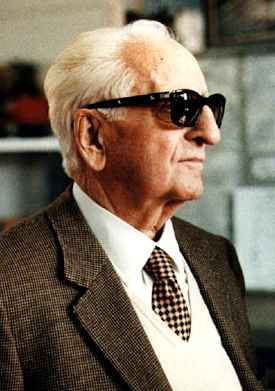
Founder of the colossus of a racing team that carries his name to this day, Enzo Ferrari died at the age of 90 in 1988 when he was still in charge of the team. Ferrari began as a moderately successful race driver in the 1920s but made more of a reputation as a general �fixer� for the Alfa-Romeo team, then one of the top teams of Grand Prix racing. His influence was directly responsible for bringing that team the brilliant mix of designers and technicians who brought it much glory.
For a time, Scuderia Ferrar � the name of the team Enzo founded � became the official competition arm of Alfa-Romeo, but the two went their separate ways just before World War II. The first Grand Prix Ferrari appeared in 1948 and was winning major Grands Prix by the following year. The team took its first World Championship in 1952 and has been winning them on and off ever since. Enzo remained as boss of the team even after Fiat bought the company in 1968.
Ferrari the man was autocratic and ascribed his success to �a flair for the agitation of men.� He would often set one engineer or driver against another, believing this was the way to get their best efforts. He rarely got close to his drivers but made occasional exceptions.

Because he is providing the money you might assume that the sponsor has a big say in how the team is run. In nearly every case, you�d be wrong. Sponsors typically hand over the money in exchange for certain guaranteed rights such as the use of team images in their advertising, an agreed number of days of exclusive access to the team drivers for any promotional events the sponsors want to do, hospitality for the sponsors and their guests at the races, an agreed amount of the sponsors� livery on the cars and team clothing, and so on. But these rights almost never extend to a say in the running of the team which is left to those best qualified for the job: the team boss and his directors.
Certain exceptions exist, however. Sometimes the sponsors are the car manufacturers who, in addition to supplying an independent team�s engines, also make a contribution to the team�s budget. Manufacturers tend to have more of a say in key technical decisions and even sometimes driver choice. Another exception is when the sponsor becomes the team owner. This situation occurred when the Benetton clothing empire progressed from sponsoring a team to buying it outright. Another example is BAR (British American Racing), which was set up from the start with the tobacco company British American Tobacco as the majority shareholder. Although representatives of the tobacco company don�t specify what angle they�d like the cylinder �vee� of the engine or the shape of the sidepods to be, they ultimately decide who does make these choices.

BAR is owned by British American Tobacco and Richards is the man contracted to run the team. Richards brought with him his own management team from his thriving engineering business, Prodrive. Like Todt and Andersson, Richards first made his name in the sport of rallying (see the section �The company-employee boss� for more information on these two men).

MD Flavio Briatore runs the Renault Formula One team. Briatore was previously in charge of the Benetton team that Renault, upon its return to the sport after a few years absence, bought out. Briatore�s background is purely commercial. He has no technical expertise (once asked a question about a fuel filter, he replied: �Hey, I wouldn�t know the difference between a fuel filter and a coffee filter�). Briatore�s lack of technical expertise, however, hasn�t stopped him from being one of the most successful of all team bosses.

The history of Ford�s Formula One involvement has determined the unique structure of its Jaguar-branded team. Ford bought the former Stewart team and initially used management from within the parent company to run it before contracting ex-drivers Bobby Rahal and Niki Lauda to run the show. Recently, it�s come round full-circle and now the team is run by Tony Purnell, an engineer and former chairman of a specialist racing technology company that Ford bought out.
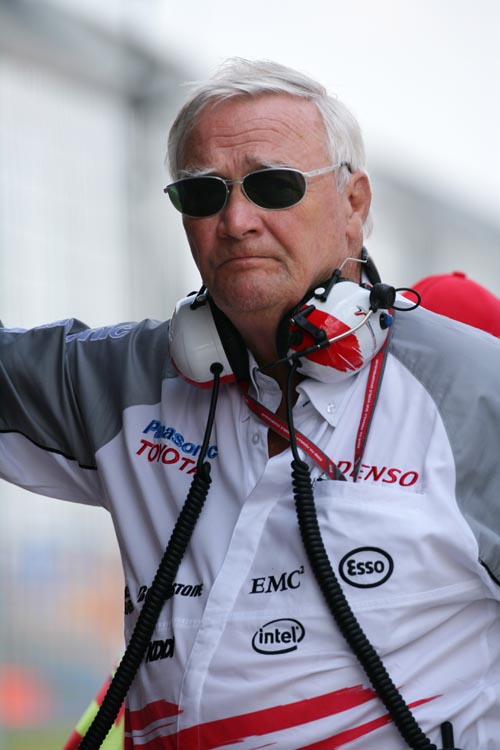
Ove Andersson, one of Todt�s contemporaries on the rallying scene, made the transition to running a manufacturer�s competition department with a certain condolence, in this case Toyota Europe�s. When Toyota decided to enter the Formula One arena, it retained Andersson to oversee the new project.

His name maybe sounds like Montezuma, the famous Aztec emperor, but for Fiat, this man is Ferrari President Luca di Montezemelo: Montezemelo, a trained lawyer, also oversees the entire Ferrari and Maserati operation, including production of their road-going sports cars. He had previously served as Ferrari team manager in the 1970s before going on to a series of high-profile management roles within the Agnelli empire that owns Fiat and, therefore, ultimately, Ferrari too. He was brought back into the Ferrari fold after the team had suffered a disastrous season in 1991.
Montezemelo brought in Jean Todt to be �sporting director� of the Formula One team, and Todt in turn hired Michael Schumacher as a driver and Ross Brawn and Rory Byrne to head up the technical department. This has proved to be the most successful team of individuals in Ferrari�s long history. Montezemelo only rarely appears at races and the running of the team falls to Todt, a brilliant organiser who first made his name in the 1960s and 1970s as a rally co-driver. Todt then went on to run the competition department of Peugeot, overseeing both its rallying and sports car racing programmes, before Montezemelo recruited him for Ferrari.

Ever since Formula One came to be dominated by small, specialist teams in the late 1950s, the team owner has come to be the traditional boss. He is the man who has usually founded the team, risked his own finances, and attracted the financial partners who support the team. He is also the one who continues to make the long term decisions. But the team owner may be chairman of the board and so have to answer to board members on the consequences of these decisions.
The current crop of team-owner bosses include men who have different backgrounds and arrived at their current positions via different routes:
Team Owner Team
Frank Williams Williams F1
Ron Dennis McLaren-Mercedes
Peter Sauber Team Sauber
Eddie Jordan Jordan Grand Prix
Paul Stoddard Minardi F1
Williams, Sauber and Jordan all began as race drivers, although none of them made it to Formula One. They quickly transferred their expertise to setting up teams in junior categories of racing and, through hard graft, sharp brains, and sometimes a little luck, made their way into Formula One. Dennis progressed from being a mechanic to a team owner through a similar combination of qualities. He took over the McLaren F1 operation in the early 1980s through a sponsor-initiated merger with his Formula Two team. Stoddard made his fortune in the airline business and, as a man with a passion for Formula One, first became involved in it as a sponsor. Eventually he bought an existing team and became, de facto, its boss.
Although Williams is the majority shareholder in his team, his Technical Director Patrick Head is a co-owner. They jointly run the team between them, but Williams has the final say. Jordan retains the controlling stake in his team, but it is part-owned by a bank. Dennis remains the ultimate boss at McLaren, though the team�s technical partner DaimlerChrysler has a 40 per cent share. Only Sauber and Stoddard are fully independent, though their teams are minnows compared to the likes of McLaren and Williams.


