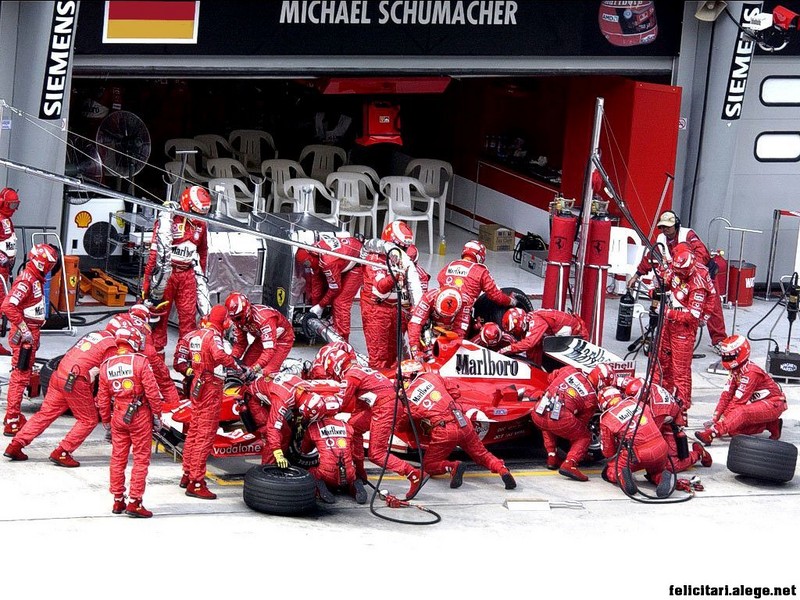
Telemetry is the transference of data from one place to another, usually via radio signals. It is a technology that has taken much of the art away from Formula One and replaced it with science. It is also a great example of how some of the less glamorous race team members play an important role in the team�s performance in a race.
Until 2003, the telemetry between car and pit garage was two-way, but since then, only carto-pits telemetry has been allowed. Pits-to-car telemetry � which was being used to change operating parameters of the car even as it was racing � has been banned in an attempt to kerb costs.
As the cars are screaming round the track, they are transmitting readings from dozens of sensors. These readings are relayed to banks of computers in the team garages, manned by data analysts who look for any imminent technical problems on the car. Because some of these problems can be rectified by the driver before any damage is done, the analysts are in regular touch with the driver�s race engineer who can instruct the driver over the radio as necessary.
Automatic data-logging is different from telemetry. The latter is simply the transference of the former. Well before the race is underway, drivers and race engineers rely heavily on data logging as a tool to help them set up the car and improve their speed. The sensors record not only car information but also the driver�s physical inputs, as well as speeds throughout the duration of the lap.
In debriefs after a practice or qualifying session, driver and engineers look at the traces that show speeds at any point on the circuit, where the driver is braking and how hard, how much steering he is using, how much throttle and when. This information can be compared between different set-ups to find whether the driver�s instinctive feelings are confirmed or repudiated. They can also be compared between team mates to see where one driver is finding time over another and how. Telemetry also records and sends vital data on engine performance, temperatures, and fuel usage. In extreme situations, telemetry information allows a team to instruct the driver to switch off the engine before it blows up. Fuel usage information may be used to help a driver gain an extra lap or so before pitting. For this reason, telemetry is a vital tool in race tactics too.